The surfing history of Crescent Head
How a small NSW village became one of Australia's great longboard towns: the point, the National Surfing Reserve, the Malibu Classic.

By Trent and Liss
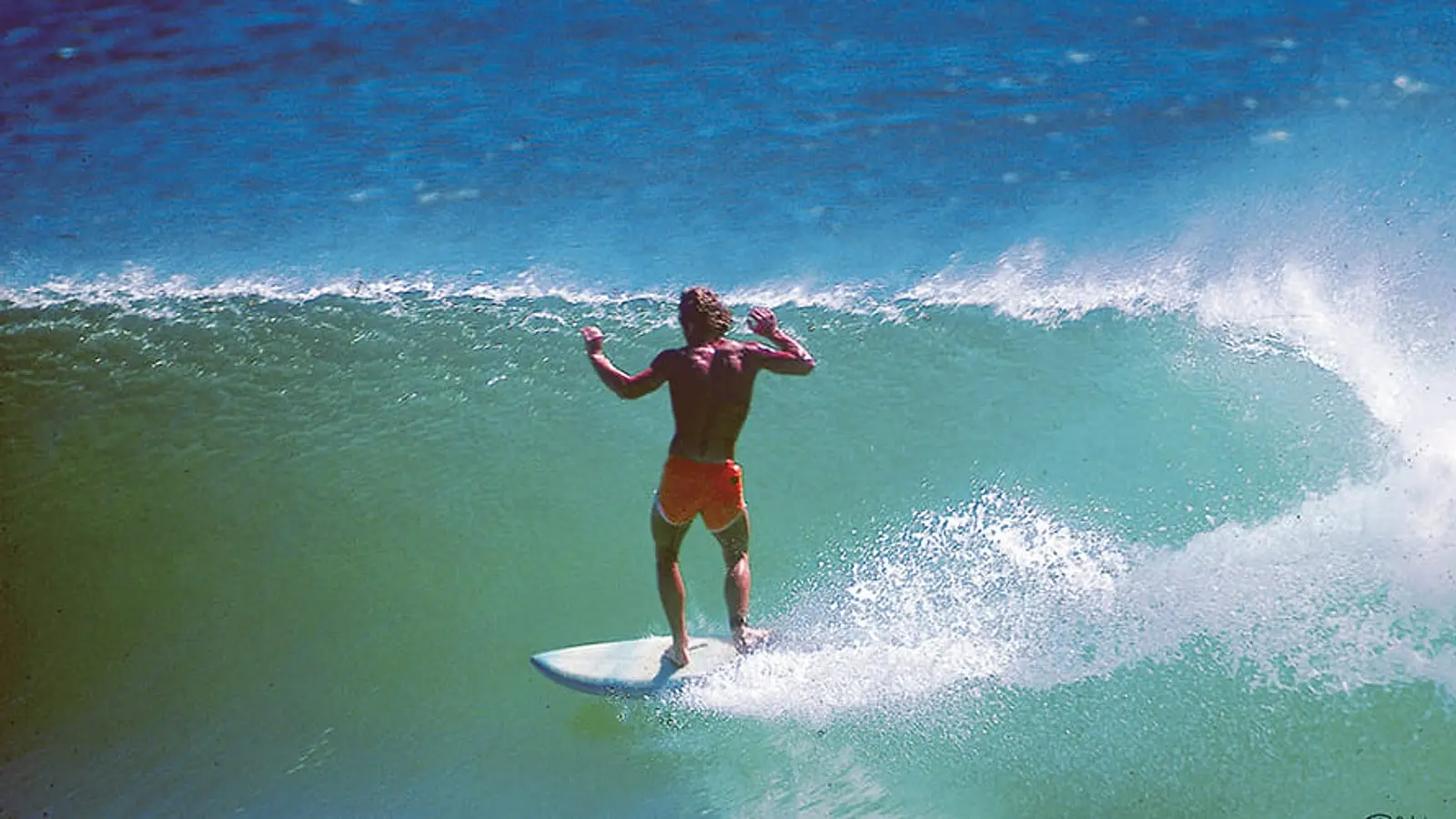
In this guide
Crescent Head is a town of fewer than a thousand people that surfers all over the world can name. That’s an unusual thing, and it’s worth understanding why — because the reason is the same reason the town looks the way it does today.
Before the surfers
The village was officially declared in 1894, though the name turns up in colonial records as early as 1833. For most of its first century it was what the rest of this coast was: fishing, farming, timber, and a very small number of people.
The Macleay Valley behind it was — and is — dairy and farming country. Kempsey, twelve kilometres inland, was the town that mattered. Crescent Head was the place at the end of the road.
The wave
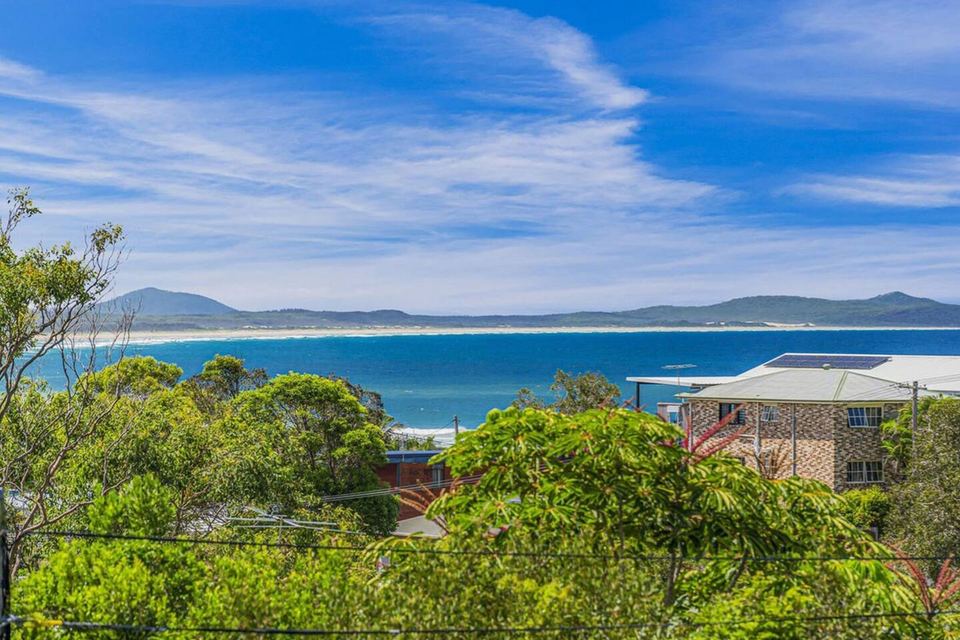
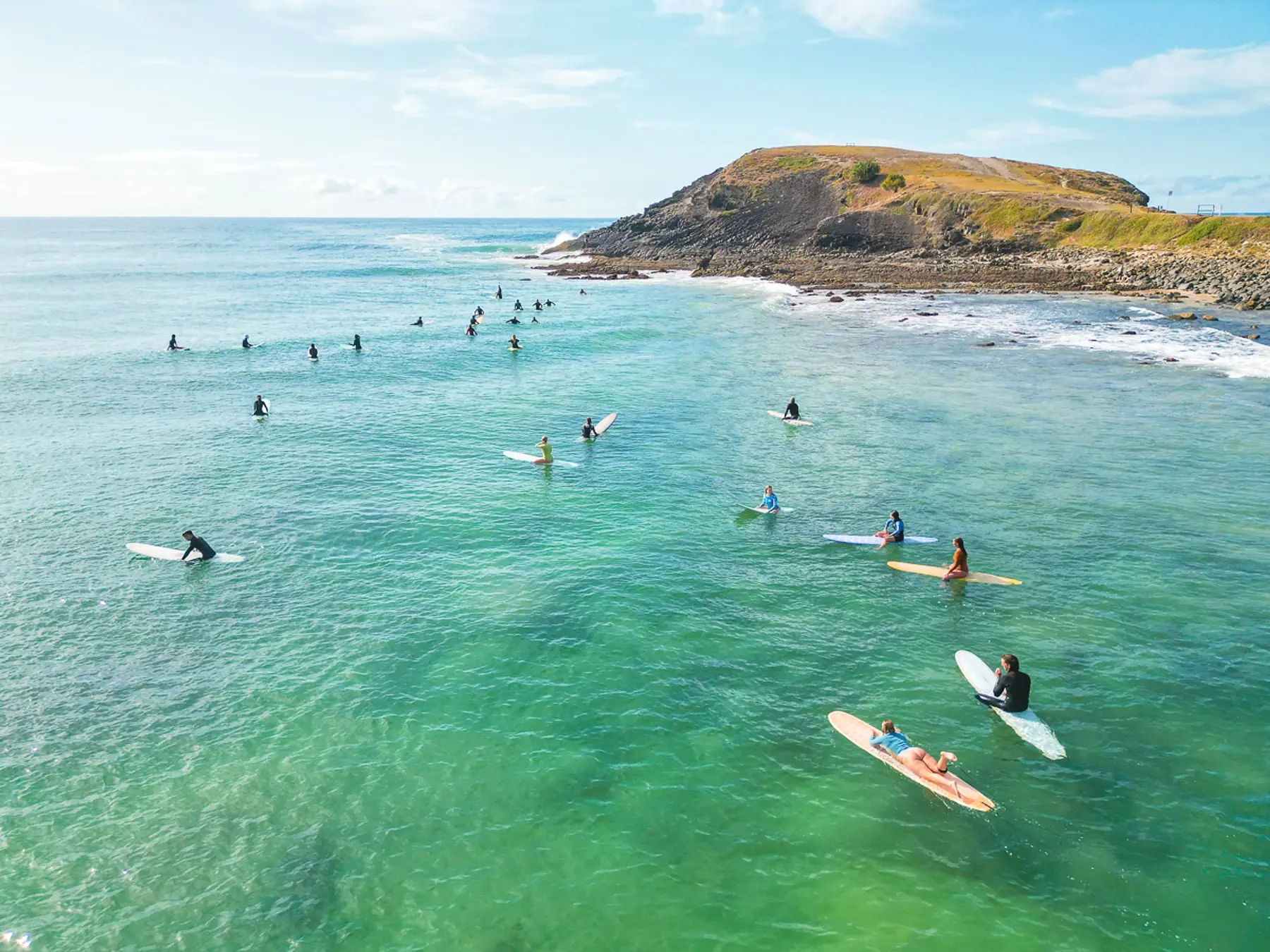
What changed it was geology. The headland juts into the bay at exactly the right angle, and swell wrapping around it forms a long right-hand point break over sand and rock that can run a couple of hundred metres on the right day.
The important word is slow. The wave doesn’t heave or throw; it peels. It gives a surfer time — time to get to their feet, time to walk the board, time to actually do something rather than survive a drop.
That’s the definition of a longboard wave, and there aren’t many of that quality anywhere.
There’s a fuller technical breakdown in our surf spots guide and on our surf accommodation page, which covers what swell and wind the point actually wants.
The sixties and seventies
Crescent Head’s reputation was built through the 1960s and 70s, the malibu era — when boards were long, heavy and made for trimming rather than turning, and a wave that ran forever was the most valuable thing in the world.
Surfers found it, told other surfers, and kept coming back. It was remote enough to stay uncrowded and good enough to be worth the drive, which is the combination that makes a legend rather than a resort.
When shortboards arrived and the rest of Australian surfing chased hollow, fast, powerful waves, Crescent Head didn’t change — because the wave it had was never going to be that, and the people who loved it never wanted it to be.
That turned out to matter. When longboarding came back around, the town was still there, still uncrowded, and still doing exactly what it had always done.
The Malibu Classic
The contest is the clearest expression of all this. The Malibu Classic is one of the longest-running longboard competitions in Australia, held on the point, and it’s a fixture of the surf calendar rather than a tour stop that could be anywhere.
It’s not a spectacle in the modern professional sense. It’s graceful surfing on a wave built for it, a friendly crowd on the headland, and most of the town turning out to watch. That’s the appeal.
If you’re planning around it, our Malibu Classic accommodation page covers the logistics — and the fact that walkable beds vanish as soon as the dates are announced.
A National Surfing Reserve
Crescent Head’s point is a declared National Surfing Reserve — a recognition given to a small number of Australian breaks of genuine cultural and historical significance.
It isn’t a legal protection in the way a national park is. It’s an acknowledgement: that a wave can be a piece of heritage, that a place can matter because of what happened in the water there, and that it’s worth saying so out loud.
For a town this size, it’s a substantial thing to hold.
Why the history is still visible
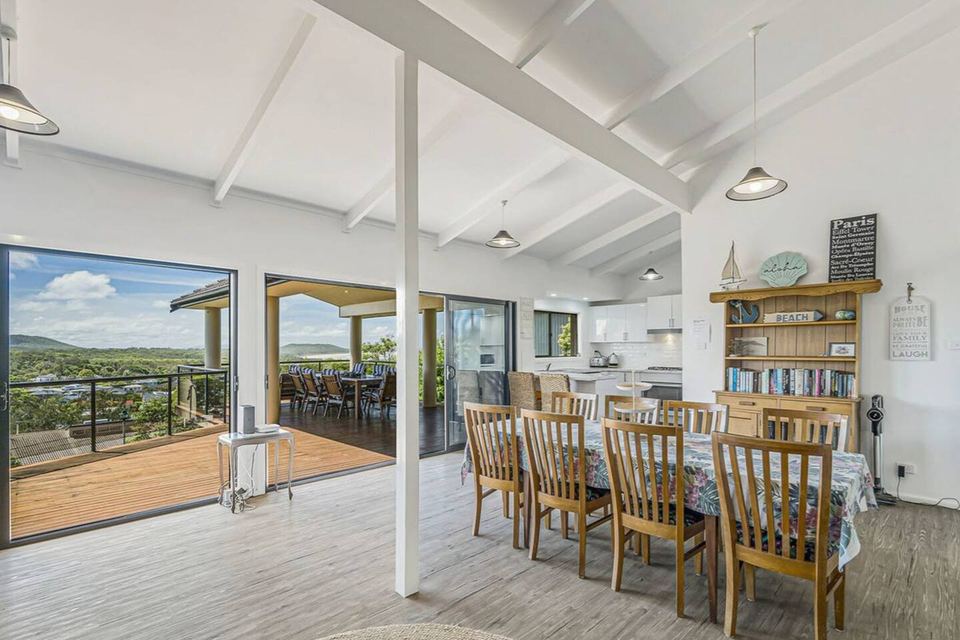
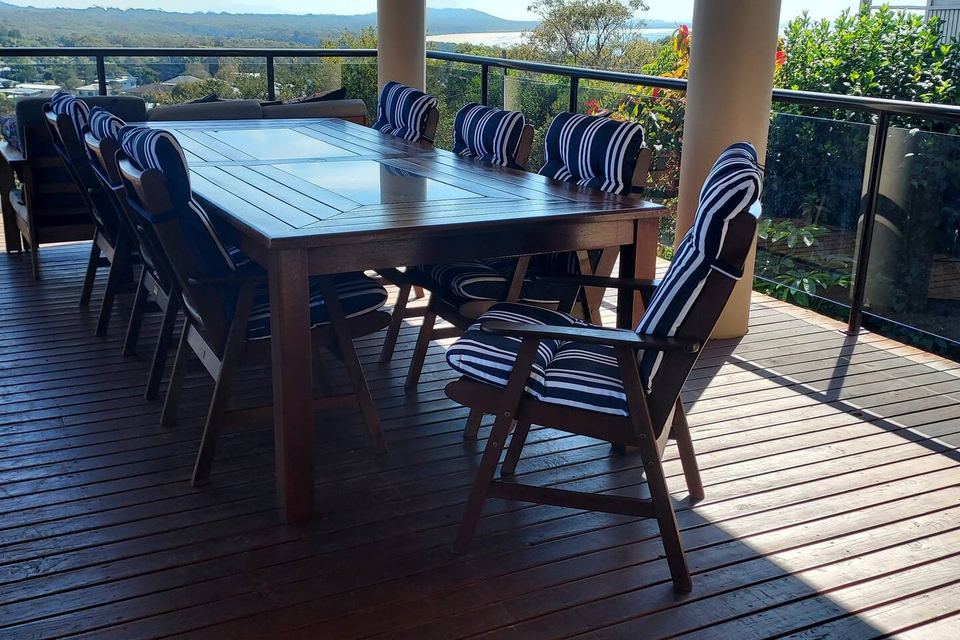
Most surf towns that get famous get developed. Crescent Head largely didn’t, and you can see the consequences of that in about ten minutes of walking around.
There are no high-rises. The commercial strip is a few blocks. There’s one supermarket, a bakery, a pub, a country club with six holes of golf on the headland, and a handful of cafes. The population sits under a thousand.
The town never converted its wave into an industry, which is why the wave is still worth having. Whether that was deliberate or just the fortunate result of being slightly too far from everything is a question you’ll get different answers to depending on who you ask at the bar.
Surfing it today
The line-up is friendly by the standards of a well-known wave, but it is a well-known wave, and a good winter swell brings people from up and down the coast.
The etiquette matters more at a point than a beach break, because everyone is riding the same wave from the same place. Our learn to surf guide has the rules worth knowing before you paddle out — and the honest version of where not to start when there’s size.
The best months are May to August, when east and south-east swell lines up with offshore wind. That’s covered in our winter surf trip guide.
More on the surf here
- The 5 best surf spots near Crescent Head
- Learning to surf at Crescent Head
- Is Crescent Head worth visiting?
See the house → · Surf accommodation → · Check availability →
Keep reading
All Surf guides-
 Surf · 5 min Learning to surf at Crescent Head Why Crescent Head is one of the best places in NSW to learn to surf — a long, gentle longboard wave, where to start, and how to make a weekend of it.
 -
 Surf · 6 min The 5 best surf spots near Crescent Head, NSW A local guide to surfing Crescent Head — the point break, the back beaches, and where to paddle out depending on the swell and wind.
 - Plan & Stay · 7 min Crescent Head in the school holidays Planning a school-holiday trip to Crescent Head, NSW? What changes in peak season — beach patrols, dog rules, crowds — and how far ahead you need to book.